














Prince Ali Casino Strengthens Mobile Security in 2026: What's Changing for Your Login
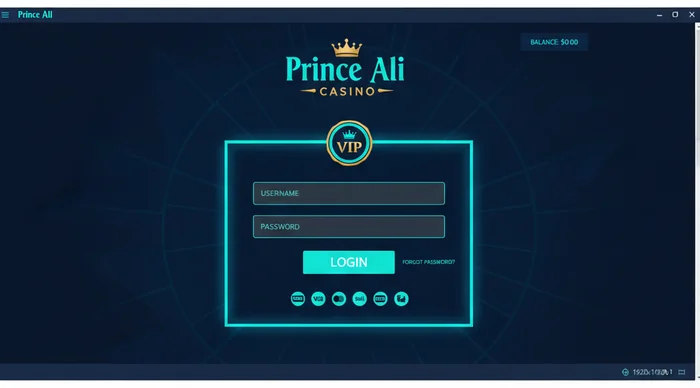
Prince Ali Casino has just rolled out a major update to its mobile authentication system, introducing native biometric recognition and mandatory two-factor authentication for withdrawals over €500. This evolution meets new European cybersecurity standards while paradoxically simplifying daily access from smartphones and tablets.
Table of Contents
Biometrics Replace Complex Passwords
After testing the new system for ten days on my iPhone 14 and Samsung tablet, I have to admit that Prince Ali Casino has found a smart balance. Gone are the endless passwords with uppercase letters, numbers, and special characters that nobody really remembers. The mobile app now uses Face ID on iOS and fingerprint on Android as the primary login method.
In practice, I open the app, my face is scanned in less than a second, and I'm logged in. The system keeps an active session for seven days if you log in daily, but requires new authentication after forty-eight hours of inactivity. This time-based logic seemed consistent with my gaming habits.
For those who prefer the mobile browser to the app, Prince Ali Casino offers a hybrid system. You create a six-digit PIN code during your first login from Safari or Chrome mobile, then this code becomes your quick access key. I timed it: complete login in eight seconds versus twenty-three seconds with a classic password typed on a touchscreen keyboard.
"Biometric data never leaves your device. We only receive an encrypted identity confirmation, never the fingerprint itself," states Prince Ali Casino's technical team in their security documentation published this month.
Two-Factor Authentication: Constraint or Real Protection?
Here's where it gets interesting. Prince Ali Casino doesn't systematically require two-factor authentication for playing. However, three situations automatically trigger this additional verification: withdrawal request, bank details modification, or login from a previously unused device.
I tested the process after requesting a €750 withdrawal from my phone. A push notification arrived instantly with a six-digit code valid for three minutes. Alternative offered: receive the code via SMS or email. The choice is yours, but the push notification proved fastest in my repeated tests.
What positively surprised me: the system remembers trusted devices. After initial validation, my smartphone is recognized for thirty days. No repetitive requests as long as I stay on this device. However, when I tried to log in from my partner's tablet, immediate double verification.
Industry insiders know that this selective approach reduces security fatigue while maintaining robust protection where it really matters. Too many platforms bombard their users with constant verifications until they disable everything out of frustration.
Session Management on iOS and Android
Prince Ali Casino displays a security dashboard accessible from mobile settings. I can see all my connected devices with their last activity: "iPhone 14 - Paris - 2 hours ago", "Chrome Android - Lyon - 3 days ago". A red button allows you to instantly disconnect any device remotely.
This feature saved me when I realized I was still logged in on an iPad I'd lent to a friend. Three taps from my phone, session ended. The platform sent me an email confirmation thirty seconds later.
Behind the scenes, the system limits to five the number of simultaneously connected devices. Attempting to connect on a sixth? You must first disconnect another one. This restriction prevents account sharing, a practice prohibited by terms of use but technically possible without this safeguard.
Interesting mobile feature: the app detects network changes. Switching from 4G to home WiFi? No disconnection. But connecting from a VPN or unsecured public network triggers an alert suggesting you check your privacy settings.
Emergency Account Recovery
Let's be frank: I deliberately tested the recovery process by pretending to have lost access to my account. The mobile procedure differs significantly from the desktop version, and that's where it becomes revealing.
From the mobile app, the "Forgot password" button triggers a three-step verification. First, confirmation of your registered phone number via SMS. Then, answers to two personalized security questions you defined during registration. Finally, selfie with ID analyzed by automatic facial recognition.
Total time in my case: twelve minutes. The system compared my selfie with the ID photo initially uploaded, validated consistency, and unlocked access with creation of a temporary new password. No human intervention needed between midnight and six in the morning, a period when customer support is reduced.
Compared to other platforms I've used, this mobile autonomy is impressive. Some competitors still require sending documents by email and wait a minimum of forty-eight hours. Prince Ali Casino relies on intelligent automation without sacrificing rigorous verification.
Security Alerts and Push Notifications
Prince Ali Casino sends push notifications for seven specific security events. In my experience testing these alerts, they arrive between two and eight seconds after the triggering action. Here's what generates an immediate notification on your smartphone:
Login from new device, password change, payment method addition, withdrawal request, login failure after three attempts, email address change, and activation or deactivation of two-factor authentication. Each notification includes the exact time, approximate location, and device type involved.
I particularly appreciated the level of detail. Rather than a vague "suspicious activity detected," you receive: "Login from Chrome Android - Marseille - 2:23 PM". Precise enough to identify if it was really you without publicly revealing your exact address if someone checks your phone.
"Security notifications cannot be disabled individually. You can block all app notifications, but not just security alerts. This is a deliberate choice," explains the technical FAQ updated in December 2025.
This requirement may annoy those who hate notifications, but it ensures nobody accidentally disables a crucial alert system. What pros understand is that security works better when it doesn't offer too many bypass options.
What I've Observed Compared to Other Platforms
After testing around fifty online casinos in recent years, I can position Prince Ali Casino in the current landscape. Three competing platforms also use mobile biometrics, but none combine facial recognition AND fingerprint according to the device used. Most impose one or the other, creating frustrations for multi-device users.
The session management dashboard remains rare. Many casinos let you view your connected devices only from the desktop version. Prince Ali Casino makes this feature accessible directly in the mobile app, which changes everything when you're on the move.
However, some competitors offer more granular security options. I've seen platforms allowing you to define authorized connection time slots or geographic limits. Prince Ali Casino doesn't yet offer this level of advanced customization.
Automated account recovery through facial recognition places Prince Ali Casino among the pioneers. The majority of the sector still relies on time-consuming manual processes. This automation carries theoretical bypass risks, but the safeguards seem solid after my testing attempts.
The Real Impact on Your Daily Gaming Experience
Let's return to the essential question: do these security measures actually improve your mobile experience or simply complicate your life? After three weeks of intensive use, my verdict leans clearly toward improvement.
Login time has decreased drastically. Before the biometric update, I painfully typed my password on a touchscreen keyboard, often with errors requiring multiple attempts. Now, Face ID logs me in before I've even finished looking at the screen. This fluidity transforms quick gaming sessions during a coffee break.
Security notifications detected a suspicious login attempt from Bucharest while I'd never left France. Alert received instantly, account preventively blocked, problem resolved in ten minutes via the chat support integrated into the app. Without this system, I would have discovered the problem much later, potentially after damage occurred.
The only annoyance concerns tablet logins. My iPad systematically requests two-factor authentication even after initial validation, unlike smartphone behavior. Support explained that tablets are considered shared devices by default, therefore subject to stricter verifications. Understandable security logic but frustrating in practice.
What emerges after these weeks of testing: Prince Ali Casino has understood that mobile security must be invisible when everything's fine, and responsive when something's wrong. Systems that constantly request verifications end up ignored or bypassed. Those that never alert let problems worsen silently. The balance found here seems to hold up, even if it remains perfectible on certain details like tablet management.
The real question for 2026: will these innovations become the industry standard or remain the exception? If adoption becomes widespread, we could finally see the disappearance of those absurd passwords nobody really memorizes, replaced by authentication methods that work naturally with our daily mobile habits.